Someone lands on your homepage from a search result or a link a friend texted them. They don't know your business name. They have a question in their head, something like "can these people fix a slate roof" or "do they do gluten free," and they're going to answer it fast. If the top of your page doesn't answer it, they go back and click the next result. They're not being rude. You just didn't give them a reason to stay.
Almost every homepage I see gets this wrong in the same way. The top of the page is a big photo with a phrase like "Quality You Can Trust" laid over it, and the actual information starts three scrolls down. That phrase could belong to a plumber, a law firm, or a company that sells industrial adhesive. It tells the visitor nothing, so they have to work to find out what you do, and working is exactly what they won't do.
The sentence everything else hangs off
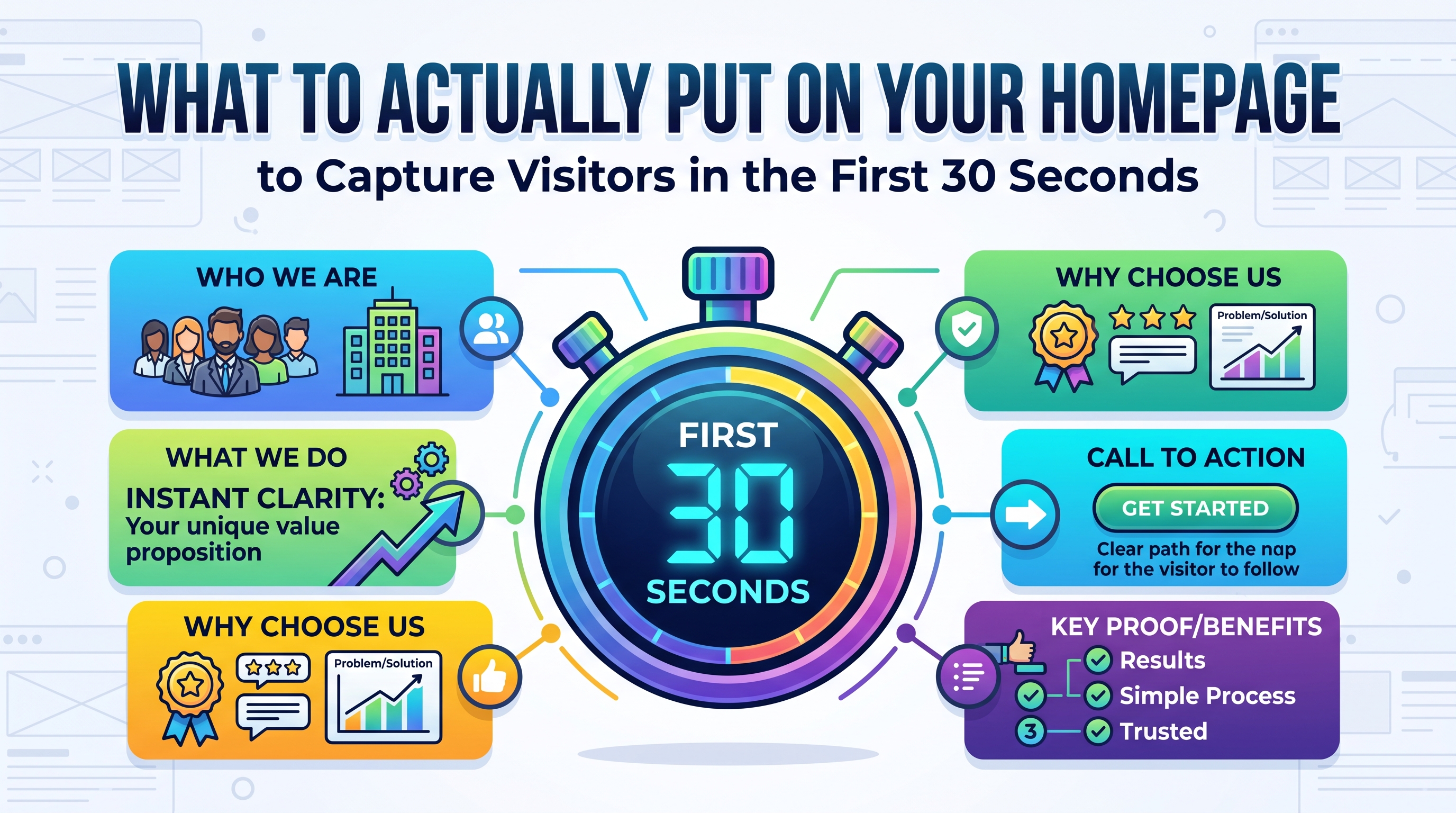
Write one plain sentence that says what you sell and who it's for. Put it at the top in the biggest text on the page.
"Family dentist in Bellingham, accepting new patients." "We rebuild and repair vintage motorcycle engines." "Hand-made sourdough, delivered across the north side on Saturday mornings." None of these are clever. All of them are finished doing their job before the visitor decides whether to scroll.
The test is simple. Could a competitor down the road put your headline on their site without changing a word? Then it isn't a headline, it's decoration. Swap in the words your customers actually use when they describe you to someone else. If people call you "the guy who does the awnings," put awnings in the sentence. You are not writing a brand statement. You are answering a question a stranger already asked.
Say where you are
If you serve a place, name the place near the top. Town, neighborhood, the radius you'll drive. This gets left off constantly, usually because the owner knows where the business is and forgets that nobody else does.
The same goes the other way. If you ship anywhere or work with clients remotely, say so, because plenty of people will assume you're local-only and rule you out.
One thing to click
Pick the single action that makes you money and make it obvious. Book an appointment. Call. Request a quote. Order.
Not four buttons of equal size. When you give someone a choice between booking, subscribing, following, and downloading a brochure, you've handed them a decision to make instead of an action to take. Most people resolve that by doing nothing.
On a phone, your number should be tappable so it dials. Check this yourself on your own phone right now, because a surprising number of sites have the number sitting there as plain text that does nothing when you press it.
Proof that you're real and people have paid you
A visitor who likes your headline immediately gets suspicious. Are these people any good? Are they even still in business?
Answer that near the top, briefly. Two short reviews with a first name attached. A photo of finished work you actually did. If you sell to other businesses, the names of a few clients. If you've been at it a long time, say how long.
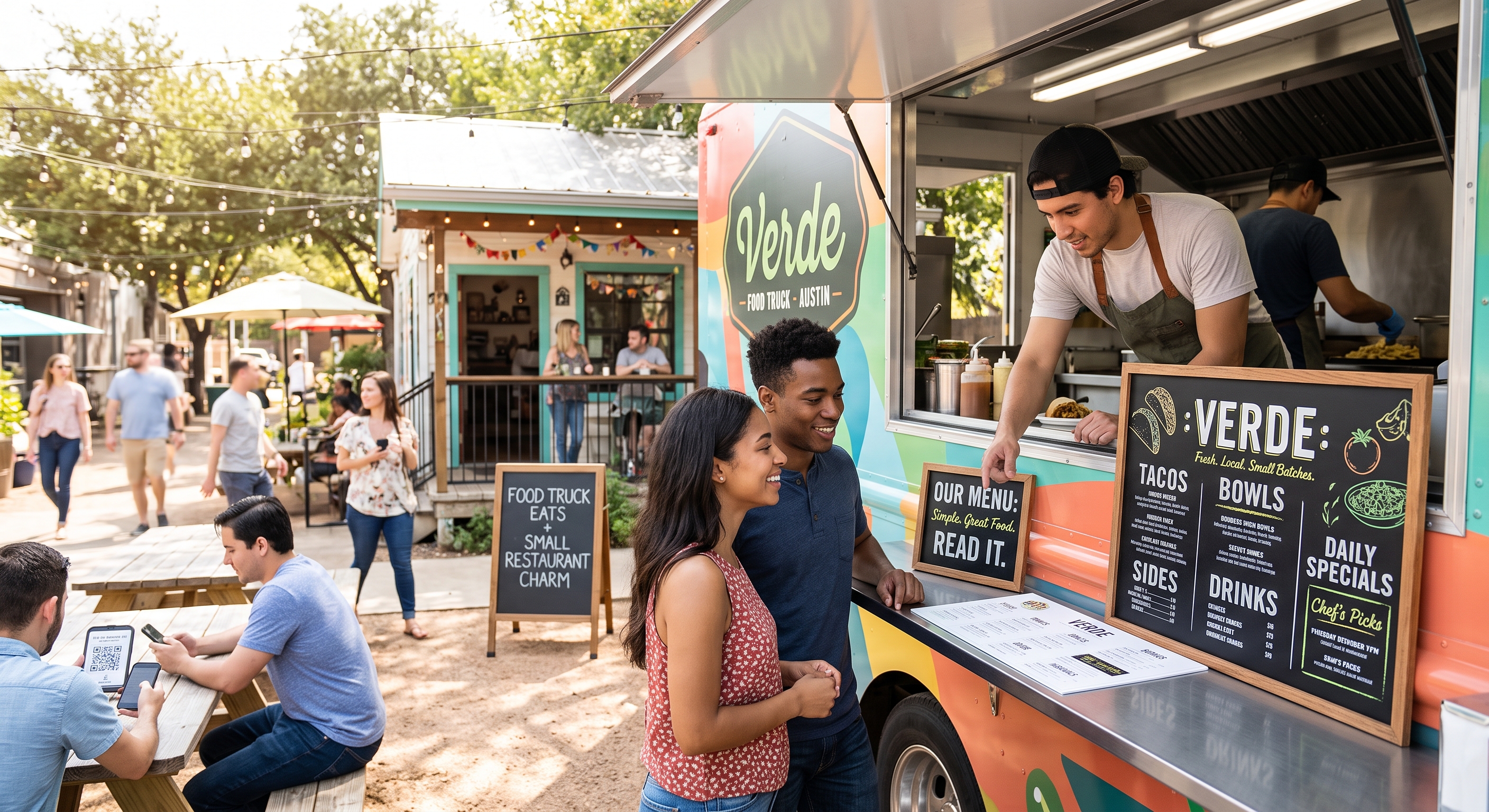
What doesn't work is stock photography. The smiling person in a headset, the four coworkers laughing around a laptop, the generic handshake. Everyone has seen those images on a hundred other sites, and they quietly signal that there's nothing real behind the page. A slightly awkward photo of you standing in your own shop beats a polished stock image every time.
The big picture at the top is doing a job
It should show the thing you sell or the result of the work. Bread out of the oven. A deck you built. The inside of your dining room with the tables set. That photo can carry as much of the message as the headline does, so don't waste it on an abstract swoosh or a sunset.
What can wait until someone scrolls
Your founding story. Your mission and values. "Welcome to our website." A rotating slideshow of five banners nobody reads past the first. A navigation menu with eleven items. Awards from organizations your customers have never heard of.
None of that is worthless. It just isn't what a stranger needs in the first few seconds, and putting it up top pushes the useful stuff below the point where most people stop looking.
Hand your phone to somebody
Open your homepage on your phone. Find a person who doesn't know your business well, a neighbor or your cousin. Let them look at the top of the screen for a slow count of ten, then take the phone away and ask two things: what do we sell, and what would you do next?
If they hesitate on either one, rewrite the headline and move the button. That's usually a fifteen minute fix if you can edit your own site. If it means emailing someone and waiting a week, get onto a builder you control yourself, which is the whole reason SiteJourney exists. Then run the ten second test again in a month, because the answer changes as your business does.